
Business Idea: Rural–Urban Passenger Transport Company (Complete Launch Plan)
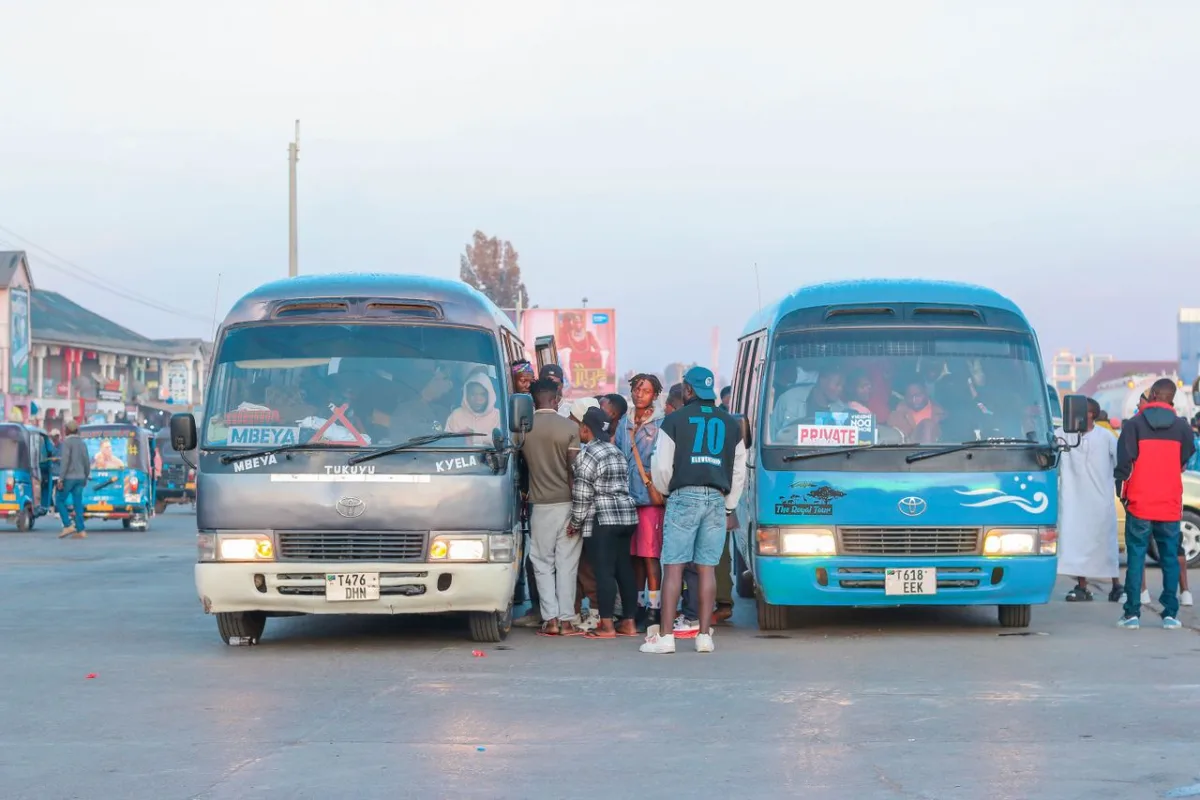
This article may contain affiliate links. We may receive a commission if you make a purchase through them, at no additional cost to you.
Introduction: why a Business Idea for a Rural–Urban Passenger Transport Company
If you’re thinking about a business idea for a rural urban passenger transport company, you start from a very practical need: people must be able to get between towns and urban areas on time for work, school, medical services, shopping, or appointments. In many regions, the link between rural and city is not flexible enough or not frequent enough, which creates room for an operator that plans consistent routes and communicates transparently.
A complete launch plan for a passenger transport business should treat the operation like a system: route + schedule + bookings + service quality + costs. It’s not just “a vehicle and a few trips,” but an offer that matches customers’ real pace.
- Demand context: commuting, access to services, mobility for all ages In rural areas, distances to the city can be large, and public transport (if it exists) may have limited timetables. Commuters need predictable departures and arrivals, students depend on school hours, and older people look for access to doctors’ offices and institutions. Also, many customers prefer transport where expectations are clearly communicated: when it leaves, how long it takes, and how they can book.
- The advantage of combining rural–urban: stable routes + seasonal flows A rural–urban business idea works well when you combine two types of demand: recurring flows (commuters, schools) and seasonal flows (start of the school year, holidays, vacations, local events). An operator who knows how to adjust the schedule can achieve better load factors and more stable revenues.
- What, in practice, a Business Idea for a Rural–Urban Passenger Transport Company means It means designing a transport offer that connects rural localities with key urban destinations (train stations, centers, work districts, institutions) and delivering it consistently: the right vehicle, a kept schedule, a clear fare, booking rules, and effective communication.
Business idea: what types of services you can offer (rural and urban)
To build a business idea for a rural urban passenger transport company that doesn’t depend only on a single route, you need a menu of services. This lets you optimize your load factor and attract different customer groups—from commuters to event groups.
- Scheduled transport: fixed trips between localities and urban areas This is the backbone. Choose a few routes with relatively consistent demand (for example, mornings to the city and evenings back) and set an easy-to-remember timetable. In rural–urban transport, clear scheduling can be more valuable than a large number of trips.
- On-demand transport: trips for groups, events, occasional travel When you have available vehicles or when demand drops, on-demand trips can cover costs. You can organize group transfers (e.g., day trips, event attendance, training course travel) with advance booking.
- Corporate transfers: employees, workshops, travel between key locations In peri-urban areas, companies often look for commuting solutions for employees. You can propose B2B contracts for transport between fixed points: locality–industrial platform–city, or transfers to workshops and meetings.
- Services for vulnerable people: assistance boarding/alighting, adapted routes You can differentiate your offer by providing boarding/alighting assistance, access support, and routes adapted for people with reduced mobility. Important: set clear procedures and conditions (for example, notifying in advance).
- Packages for schools and afterschool (depending on legislation and contracts) If local regulations and contracts allow, you can offer packages: transport at class times + afterschool, on a fixed basis. Often, schools need predictability and clear communication. A complete launch plan for a passenger transport business should also include this direction, because it can bring consistent volumes.
Market analysis: how to validate demand and choose the right routes
An essential part of the complete launch plan for a passenger transport business is not to set off based on intuition alone. A good idea can fail if routes are chosen incorrectly or if the schedule doesn’t match real needs.
- How to identify demand areas: local surveys, community groups, data from town halls Start with direct conversations: town halls, local committees, Facebook groups, parents’ associations, and commuter communities. You can run micro-surveys (short questionnaires) and ask: where do people leave from, at what times, how many would travel, what alternatives they have right now, and how much they’re willing to pay.
- Competition map: existing operators, indicative prices, service quality Don’t look only at price. Check frequency, punctuality, the way communication works (is there a public timetable?), ease of booking, and vehicle quality. If people are unhappy with existing services, you have a chance to enter with a clearer offer.
- Rapid validation method: pre-orders, waiting lists, a schedule prototype Instead of launching fully, test first. You can open an interest list for a pilot route and request pre-orders (for example, for subscriptions). If demand is sufficient, increase frequency. If not, adjust the route or times.
- Seasonality and peaks: vacations, start of the school year, holidays Vacations can reduce commuting, but can increase trips to events or tourist areas. The start of the school year and periods with extra activities (Olympiads, competitions, camps) may bring peaks. Plan your capacity and budget around these cycles.
- Customer segmentation: commuters, schoolchildren/students, tourists, people traveling for services Each segment has different needs: commuters want fixed times and subscriptions; students need synchronization with the school timetable; and people going to appointments may prefer “daytime” trips or routes that pass convenient stops.
Business model: how you make money in passenger transport
To be sustainable, the business idea for a rural urban passenger transport company needs a diversified revenue model and good cost control. In transport, profit comes from combining load factor, price, and route optimization.
- Revenue from tickets per trip and monthly/weekly subscriptions Per-trip tickets bring quick cash, while subscriptions provide stability. For commuters, weekly or monthly subscriptions are often preferred, reducing demand fluctuations.
- Revenue from B2B contracts (companies, institutions) and B2G (through tenders/partnerships) B2B/B2G contracts can ensure volume and predictability. In practice, you can start with local partnerships (small companies, institutions) and then expand to larger contracts as your reputation grows.
- Additional revenue: luggage transport, group trips, extra hours You can add services that don’t overly complicate operations: luggage transport (if justified), group trips with package pricing, and extra requested hours for events.
- Occupancy strategy: reduce unprofitable trips and increase load factor If you have a route with variable demand, track the data: how many passengers actually board, on which days, and at what times. Adjust frequency (for example, more trips during peak periods, fewer during off-peak) and introduce subscriptions to increase load factor.
- Pricing policy: balance between affordability and sustainability In rural–urban transport, the fare should remain affordable, but it must cover real costs (fuel, maintenance, travel time, and resources). A fare that’s too low drains cash, while one that’s too high can reduce demand. That’s why prices should be tested and adjusted.
Complete launch plan: steps from idea to your first trips
Below is a complete launch plan for a passenger transport business structured by stages. The goal is to reach your first trips quickly, but with enough preparation to avoid getting stuck in operational problems.
- Stage 1 (0–30 days): validate demand, choose a pilot route, financial estimates
During this stage, you validate demand and choose your pilot route. Make a list of 2–4 possible routes, then select one (or two) based on: estimated demand, distance, travel time, vehicle availability, and subscription potential. Prepare financial estimates: fixed costs (authorizations, insurance, estimated maintenance) + variable costs (fuel, taxes). Build a realistic occupancy scenario and a break-even threshold.
- Stage 2 (30–60 days): buy/lease a vehicle, operational setup, minimal branding
Choose the vehicle option (purchase, leasing, or short/long-term rental) depending on your budget and risk tolerance. Set up operations: documents, procedures, booking rules, and a confirmation system. Create minimal branding: name, a simple logo, easy-to-apply vehicle markings, and digital materials (timetable and fares in an easy-to-read format).
- Stage 3 (60–90 days): pilot launch, collect feedback, adjust schedule
Launch the pilot with a realistic timetable (don’t overload from day one). Monitor punctuality, demand by day and time, and how easily people can reserve or buy tickets. Collect feedback: what worked well, what was unclear, and what needs schedule adjustments. Update both the schedule and communication.
- Stage 4 (3–6 months): expand routes, subscriptions, local partnerships
If the pilot route works, expand gradually: more trips or a new route. Introduce subscriptions for segments with recurring demand (commuters, students). At the same time, build partnerships: schools, local companies, medical practices, community organizations. These can bring customers without heavy marketing costs.
- Stage 5 (6–12 months): fleet optimization, sales automation, and dispatch
Once you have real data (occupancy, cost per km, travel time), optimize the fleet and schedule. Automate sales and communication (at least through a simple booking and confirmation system). If you add more routes, consider dispatching (internal or outsourced) to reduce errors.
Launch budgets: realistic initial costs for the business
A complete launch plan for a passenger transport business must include realistic budgets. In passenger transport, the most common problems happen when entrepreneurs underestimate authorization costs, insurance, maintenance, and cash buffers for the first months.
- Vehicle(s): purchase vs leasing vs long-term rental (pros/cons)
Purchase: high upfront cost, but better control. Leasing: monthly payments, lower cash risk at the start. Rental: flexibility, but the cost per use can be higher. For a pilot route, renting or leasing can be prudent options.
- Authorization and compliance costs: documents, permits, taxes (indicative estimates)
These costs vary depending on the type of services and the legal framework. Budget for: registration/approval (if applicable), permits, authorizations, technical inspections, mandatory insurance, and documentation. Important: leave room for administrative delays.
- Vehicle outfitting: signage, branding, safety equipment
Even a new vehicle needs elements that increase trust: vehicle markings, timetable/fare display, and safety equipment according to requirements. If you offer services for vulnerable people, you may need additional accessories or procedures.
- IT and operations: simple website/landing page, dedicated phone line, booking system
You don’t need to build a complex portal, but you do need an information hub: a simple website or landing page with timetable, routes, fares, FAQ, and contact details. A dedicated phone line and a booking system (even a simple solution) reduce errors and increase professionalism.
- Launch marketing: flyers, local posts, community partnerships
In rural–urban areas, effective marketing is often local: posters at relevant spots, flyers distributed in communities, posts in local groups, and collaborations with schools and companies. The budget should also include costs for printed materials and staff time.
- Contingency budget (cash buffer) for the first 2–3 months
Transport can have periods with lower load than estimated. Create a buffer for fuel, maintenance, salaries/collaborators (if applicable), and administrative costs. A buffer helps you keep the service running even when a minor issue appears.
Monthly budgets (OPEX): what expenses you should anticipate
OPEX (operating expenses) is what determines whether you survive. In passenger transport, costs are recurring, while revenues can fluctuate. That’s why you need to calculate OPEX realistically and track monthly differences versus your budget.
- Fuel and maintenance: how to estimate consumption per route and annual costs
Estimation is based on distance and travel time. Calculate: km per day * days per month * average consumption (l/100 km) * fuel price. For maintenance, include scheduled services, consumables, periodic checks, and a reserve for repairs.
- Insurance, taxes, and recurring licenses
Insurance (compulsory liability, and comprehensive if applicable, plus additional coverage) and recurring taxes must be included. Some costs may be seasonal or depend on actual activity.
- Salaries/collaborators: driver(s), dispatch/operations manager (if applicable)
If you’re not driving yourself, you need a driver. In addition, dispatching (even part-time) helps you manage bookings, delays, and communication. As routes grow, this role becomes critical.
- Administrative costs: accounting, software, telecommunications
Accounting, possibly invoicing/management software, phone/internet subscriptions, and costs for documents and archiving are included here.
- Ongoing marketing: local promotion and maintaining subscriptions
Marketing doesn’t stop after launch. You need to maintain subscriptions, remind customers of the timetable, and update information when changes occur. You can do this efficiently with local posts and email/SMS (if you have customer consent) for communications.
- Unexpected costs: repairs, replacements, low-traffic days
A reserve for repairs and demand variations protects you. In the first months, when you’re still adjusting the schedule, fluctuations are inevitable.
Prices and fare structure: how to set fares correctly
Price is one of the most sensitive elements. In the business idea for a rural urban passenger transport company, your fare must be competitive, but still respect real costs and support investments. A clear fare structure reduces confusion and losses.
- Fare per trip: based on distance, time, demand level, and cost per kilometer Start from cost per km and add components for time (traffic) and demand level. If the city is farther away or the road is harder, the fare should reflect that reality.
- Subscriptions: 4/8/12 rides or monthly (for commuters) Subscriptions stabilize revenue. You can have subscriptions based on number of rides (for flexibility) and a monthly subscription (for commuters).
- Differentiated fares: peak hours vs off-peak, weekdays vs weekends If you have peak hours with high demand (morning and evening), you can adjust the fare slightly. On weekends or off-peak periods, you can use promotional fares to maintain load.
- Discounts and packages: groups, schoolchildren/students (if it fits) Depending on your policy and legal possibilities, you can offer discounts for groups or certain categories. Important: discounts must be controlled (minimum number thresholds, verification rules).
- Cancellation and modification policies: clear rules to reduce losses Set rules: how far in advance you can cancel, whether there is partial reimbursement, and whether there’s a processing fee. Clear rules reduce disputes.
- Fare grid examples (indicative) for short and long routes For short routes, the fare may be closer to cost per km plus a small margin. For long routes, the margin can increase to cover travel times and the lower load risk. In practice, use a model: cost per km + time cost + risk margin + VAT (if applicable).
Sales estimates: how to calculate the break-even point
A critical part of the complete launch plan for a passenger transport business is knowing when you become profitable. The break-even point tells you how many trips (or what occupancy level) you need to cover your costs.
- Formula: revenue = number of trips * ticket price * occupancy rate Start with a simple model. For a route: calculate how many trips you make in a month, multiply by the average price, and by the occupancy rate (what % of seats are sold).
- How to choose a realistic occupancy rate (depending on route and schedule) Don’t assume 100% from the start. Use data from initial validation: interest lists, pre-orders, surveys. For new routes, start conservatively and then adjust.
- Break-even point: when you cover fixed and variable costs Break-even happens when revenue covers: fixed costs (basic insurance, maintenance, administration) plus variable costs (fuel and costs directly proportional to km).
- Scenarios: conservative, realistic, optimistic (with sales ranges) Build 3 scenarios. The conservative scenario shows what happens if sales are below expectations; the realistic scenario helps you plan; and the optimistic scenario shows growth potential and when it might be time to add trips.
- How to grow sales: subscriptions, partnerships, stable schedule In transport, sales grow with trust. A stable schedule + communication + subscriptions for commuters + local partnerships (schools, companies) can increase load factor without disproportionately increasing marketing costs.
Team and operations: who does what so everything runs smoothly
Even if you start small, you need order in operations. A business idea for a rural urban passenger transport company works when you clearly define roles and procedures. Without them, delays, misunderstandings, and losses appear.
- Minimum roles: operations manager, driver, customer support At the beginning, you can cover the operations manager part yourself. Still, when the number of trips grows, it’s good to have someone dedicated to customer support/dispatch.
- Scheduling trips: dispatch, bookings, confirmations Dispatching (internal or outsourced) handles bookings, confirmations, and communication. A good rule: confirm in advance (for example, 24h before) and clearly announce when changes occur.
- Procedures: technical check before each trip, passenger safety Before every trip, check: technical condition, safety equipment, door/luggage compartment operation (if applicable), and onboard documents. Safety must be a procedure, not an improvisation.
- Handling complaints and feedback: respond quickly, transparent rules Complaints must be handled promptly. Provide answers in clear terms: what happened and what measures you’ll take. If you have cancellation and delay policies, communicate them from the start.
- Quality standard: punctuality, communication, cleanliness, driver behavior Standards are your differentiator. Punctuality, vehicle cleanliness, and driver behavior directly influence recommendations and subscriptions.
Local marketing and sales: how to attract your first customers
Launching a rural–urban route depends heavily on local marketing and on channels that reach the community. In this market, people find out through word of mouth, community groups, and posters at frequently visited places.
- Launch strategy: local announcements, partnerships with town halls/schools/companies Before the first trip, announce through local channels: town hall, posters at relevant spots, and conversations with schools and companies. A partnership can bring customers even in the first month.
- Digital channels: Google Business Profile, Facebook/community groups, simple website Create a Google Business Profile for local visibility. On Facebook, join community groups and post the timetable and fares regularly. A simple website helps ensure consistent information.
- Useful content: timetable, routes, fares, FAQ, transport conditions People want clarity. Publish: timetable by day, routes, stops, fares, booking/cancellation rules, what happens in case of delays, and how customers can contact dispatch.
- “Early bird” campaigns: subscription discounts in the first weeks To validate quickly, you can offer a promotional price for subscriptions in the first weeks. This boosts cash flow and validates demand.
- Referrals: referral program for groups and commuters A referral program (for example, a discount for each customer you bring in) can work well in communities. Important: keep the rules simple.
Competitive advantages: how you differentiate from existing operators
In many areas, there are already transport providers or alternatives (minibuses, public transport, occasional trips). To win customers, you must differentiate through perceived quality and predictability.
- Punctuality and communication: confirmations and updates for customers When people know what’s happening on time, they trust you. Confirmations and updates reduce stress and complaints.
- Coherent schedule: routes that truly match real needs Don’t offer “timetables just for the sake of it.” In rural–urban transport, if the schedule doesn’t fit work or school hours, demand drops.
- Controlled flexibility: extra on-demand trips for groups Offer flexibility, but with rules. Extra group trips can fill gaps and increase revenue without disrupting the core schedule.
- Perceived quality: cleanliness, comfort, safety, assistance A clean vehicle, comfort, and safety are visible. Assistance (including for vulnerable people) can strongly differentiate you.
- Transparency: clear fares, cancellation rules, quick responses Transparency reduces misunderstandings. When fares and rules are clear, customers are more likely to stick with you.
Risks and how you manage them (legal, financial, operational)
Any transport business has risks. A complete launch plan for a passenger transport business should include control measures to limit the impact of problems.
- Legal risks: permits, compliance, contracts, and responsibilities Check all legal requirements for your type of services. Document responsibilities and ensure your processes (bookings, invoicing, rules) align with the applicable requirements.
- Financial risks: cash flow, initial investments, fuel price fluctuations Cash flow can be difficult in the first months. That’s why you need a buffer and weekly cost monitoring. Fuel fluctuations can be partially offset through route optimization and subscriptions.
- Operational risks: breakdowns, delays, lack of drivers Create procedures: a maintenance plan, checks before each trip, and a protocol for delays (how you inform customers). For driver shortages, build a network of backup collaborators.
- Market risks: demand lower than estimates, aggressive competition Test routes with a pilot and adjust. If competition appears, don’t rely only on price; differentiate through communication, punctuality, and quality.
- Continuity plan: reserve budget, alternative route, replacement partners In your plan include: how much cash you have for the first 2–3 months, what alternative route you can activate if one doesn’t work, and what partners you can use for replacement (vehicle/driver) in an emergency.
Practical checklist: complete launch plan for a passenger transport business
To turn ideas into actions, use this checklist. It’s designed specifically for a business idea for a rural urban passenger transport company and for a complete launch plan for a passenger transport business that helps you reach your first trips without getting stuck.
- Before launch: validate route, prices, schedule, vehicle outfitting, procedures
Have you confirmed demand (at least through interest lists/pre-orders)? Have you set the pilot timetable and fares? Does the vehicle have the required equipment and documents? Do you have technical check and safety procedures? Do you have a booking system and cancellation rules?
- On launch day: communicate the schedule, booking channels, customer support
Communicate the timetable across all channels: online and local. Ensure a dedicated phone line and a clear booking method. On the first day, stay actively in touch with customers and respond quickly.
- First 30 days: monitor occupancy, punctuality, feedback
Track: occupancy rate per trip, punctuality, and the reasons people don’t buy tickets (if it happens). Collect feedback and note what needs to be adjusted.
- First 90 days: fare adjustments, route optimization, subscription consolidation
By 90 days, you’ll have enough data to adjust. You can change departure times, frequency, and fares. At the same time, shift more and more toward subscriptions for recurring segments.
- After 6 months: expansion, partnerships, fleet scaling
If the pilot is profitable or close to profitable, expand gradually. Look for partnerships and, if volume increases, scale the fleet in a controlled way (before you lose control of costs).
Conclusion: the next step for a Business Idea for a Rural–Urban Passenger Transport Company
A business idea for a rural urban passenger transport company has real potential because it solves an everyday problem: mobility between rural areas and the city. But success comes from planning and execution: the right routes, a coherent schedule, transparent communication, and cost control. A complete launch plan for a passenger transport business helps you move from idea to your first trips and build trust in the community.
- Summary: what you need to do in the first 90 days Validate the pilot route (demand + times), prepare the vehicle and procedures, launch the pilot, and collect feedback. Then adjust the schedule and fares and start consolidating subscriptions.
- How to use budgets and estimates for quick decisions Keep monthly records of costs and track occupancy. Compare reality with the conservative/realistic/optimistic scenarios and decide quickly: adjust the timetable, optimize routes, or change your sales strategy.
- Recommendation: start with a profitable pilot, then expand gradually Don’t expand before you have data. Start with a pilot route that can be profitable or close to the break-even point, then expand gradually. This way you build a solid business, not just a trial.
Related articles

Business idea: managing your Google Business Profile (complete plan)
Help your local business get more calls and visibility with a complete launch plan for managing your Google Business Profile: audit, optimizations, reviews, posts, and monthly reporting—without risky promises.
Read →
Business idea: Local lead generation agency for small businesses (complete plan)
A local lead generation agency business idea can bring real clients to small businesses if you clearly define what a “lead” is, qualify the results, and deliver quickly. This complete guide includes the offer, process, tracking, landing page, budget, and a 30–90 day plan.
Read →
Business idea: team building organizing company — complete launch plan
Find out why a business idea for a team building organizing company has consistent demand in B2B and how to build a complete launch plan: offer, pricing, budget, operations, marketing, and a 30/60/90-day roadmap.
Read →