
Business idea: mobile phone repair services. Complete launch plan
This article may contain affiliate links. We may receive a commission if you make a purchase through them, at no additional cost to you.
Business idea: mobile phone repair services can be one of the fastest ways to start a local business, because there’s always a steady need: phones break, get cracked, batteries wear out, and people want fast, transparent solutions. Plus, if you build a clear process (intake, diagnosis, estimate, repair, verification, handover), you can turn every order into a recommendation.
Below you’ll find a complete launch plan for a mobile phone repair business, designed for a realistic start: from choosing services and setting prices, to marketing, warranty, team, and the steps for your first 2 weeks.
Why mobile phone repair services are a business idea (and who buys)
- constant demand: cracked screens, batteries, charging ports, software issues, loose connectors, faulty cameras, buttons that no longer respond. Every month brings thousands of similar cases, and users tend to look for local or fast repairs.
- customers: individuals, students, families, and microbusinesses (employees who need a phone for communication and invoicing). Many prefer to pay for immediate resolution, especially if they receive a warranty.
- advantages: less downtime (scheduling, quick handover), transparent pricing (estimate before approval), warranty (for labor and/or parts), clear communication (status updates via WhatsApp/SMS).
- trends: the growing smartphone fleet and longer usage periods. People keep their phones longer, so repairs become more frequent in the mid term: battery replacements, port and screen repairs, plus software interventions.
Complete launch plan for a mobile phone repair business: business model and positioning
- choose a model: small-scale service (workshop), a dedicated on-site location with set opening hours, or partnerships (you receive phones from other locations and send them to service). An efficient start can begin with a small workshop and an organized order flow.
- positioning: premium (quality + warranty, excellent communication, verified parts) or affordable (fast turnaround + controlled costs). The best way to stand out is through your process and warranty—not just price.
- core services: diagnosis, hardware repairs, component replacement (screen, battery, charging port, camera), software interventions (updates, data recovery, unlocking, resolving lockups/bootloops).
- optional services: data transfer, unlocking (within legal limits and in line with platform policies), port cleaning, refurbishment for resale (cleaning, replacing worn components, full testing).
- warranty policy and transparency: state clearly: how long the warranty lasts, what it covers (labor and/or parts), when it’s voided (later mechanical shock, unauthorized interventions), and what isn’t covered (faults not identified at intake due to insufficient information or progressive degradation).
What services to offer: the list that maximizes revenue and reduces risk
- prioritize the most common defects: screens (LCD/OLED), batteries (low capacity, heating, fast discharge), chargers/ports (loose jacks, oxidized contacts), cameras (scratched lens, camera that no longer focuses or won’t show an image).
- include parts and labor for standard interventions: create “packages” with predictable turnaround times. Customers love certainty: “in X hours / in Y days.”
- set acceptance thresholds: when a repair is worth it versus when you recommend replacement (e.g., screen + severely deformed frame, boards with multiple defects without a complete diagnosis, costs that exceed the customer’s perceived value).
- create packages: “Screen in 2 hours” (if you have parts and have standardized the process), “Battery and battery-life optimization” (with testing and calibration/software optimization), “Charging port” (cleaning + component replacement + charging verification).
- add upsells: protections (screen films, cases), maintenance services (port cleaning, checks after repairs), backup and data transfer (for customers who worry about their data).
Market and competition analysis: how to find prices and differentiate yourself
- map the competition: local repair shops, retail stores, online platforms. Note: turnaround time, warranty types, communication method, and whether they provide an estimate before approval.
- analyze reviews: what customers complain about (deadlines, quality, communication, lack of warranty or unclear warranty). That’s where you have an immediate opportunity to stand out.
- check price ranges: screen, battery, ports, camera, software repairs. Don’t copy; create your own calculation method, with a margin and covered risk.
- differentiate through your process: free/paid (and clear) diagnosis, estimate before approval, testing after repair, and an internal checklist.
- differentiate through experience: consultancy, photo/video reports at handover (especially for visible defects), written warranty, and proactive communication.
Choosing location and sales channels: from the workshop to orders
- location: commercial visibility vs easy access vs controlled rent costs. If you start small, look for a place where customers can reach you easily and where you can provide a fast flow (without idle time).
- hours: time slots that cover demand (afternoons, weekends). Many customers need handover after working hours.
- channels: Google Maps (essential for local reach), Facebook/Instagram (for credibility), a simple website (presentation + contact + services), WhatsApp Business (for estimates and scheduling).
- partnerships: GSM stores, auto repair shops (for referrals), schools/universities (seasonal campaigns: back to school, exams, discounts on protections).
- logistics: pickup/delivery in the area (for a fee) or courier partners. Even at the beginning, you can start with local pickup/delivery, then expand.
Equipment and supplies: a starter list with indicative budgets
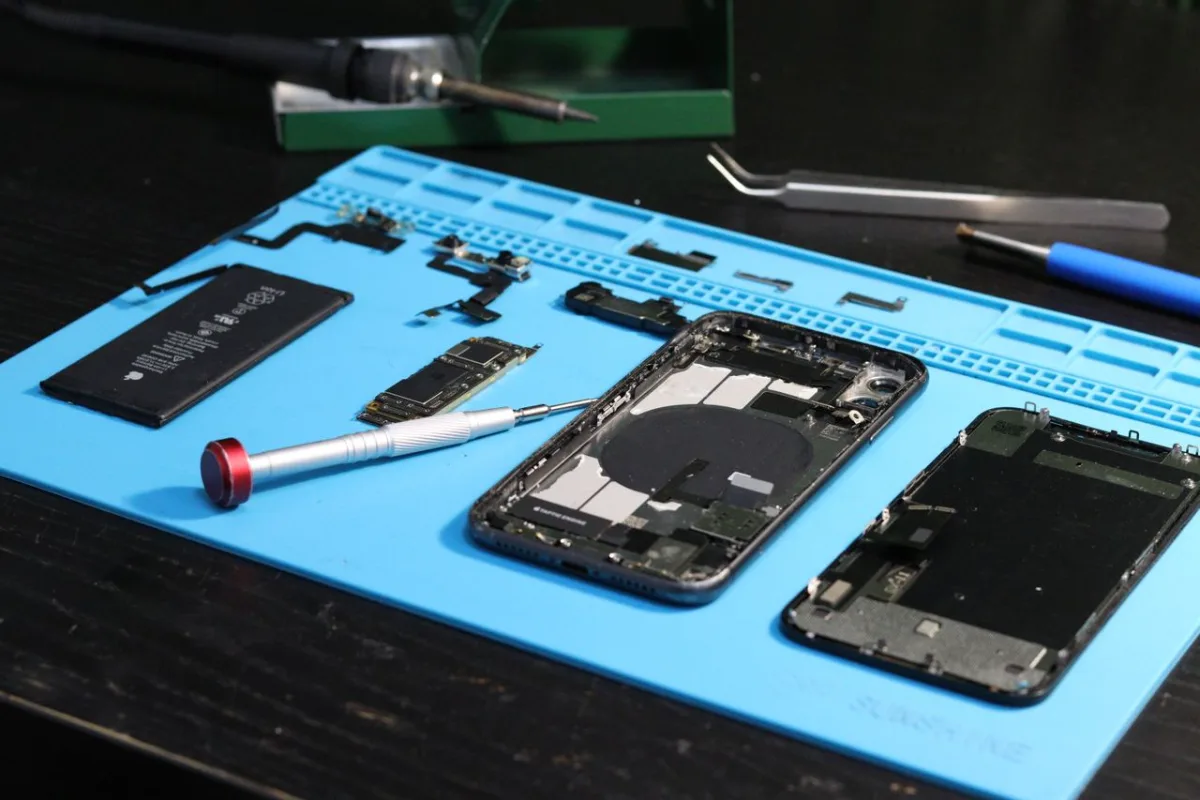
- essential tools: precision kits, screwdrivers, suction cups, spatulas, tweezers, frames/organizers for screws. Tool quality reduces the risk of additional damage.
- equipment: soldering station, heating/rework plate, microscope/loupe (recommended), hot air device. At first, prioritize what allows you to work consistently and cleanly.
- diagnostic instruments: multimeter, test cables, software/readouts (depending on the model) for specific checks. Important: diagnosis must be reproducible.
- consumables: adhesives, protective film, compatible components, cleaning solutions (for ports and contact areas). Keep a list of “standard” consumables for each type of intervention.
- minimum stock: parts for 5–10 popular models (so you don’t tie up money). In the first months, target real volumes—not “all models.”
Launch budgets: how much it costs to start and how to keep expenses under control
- initial budget (setup): equipment, furniture (work table, lighting), materials, branding (sign, flyers, QR codes).
- operating budget: rent, utilities, subscriptions, marketing, accounting. Also include maintenance costs (consumables, minor equipment repairs).
- emergency fund: margin for defective parts, returns, unforeseen repairs (e.g., components that don’t fit perfectly or require rework).
- cash flow: how to avoid cash shortages: orders in advance (for special parts), a customer deposit for repairs that require parts brought to order, clear payment policies.
- example scenarios: minimal start (small workshop + low stock + 3–5 main services), medium start (expand stock + add software diagnosis and packages), start with a dedicated location (hours and dedicated reception, plus more aggressive local marketing).
Pricing and service list: how to set rates that cover costs and generate profit
- price structure: parts cost + labor + risk + warranty + overhead (rent, utilities, marketing, payment processing commissions).
- labor by categories: diagnosis, screen replacement, battery, charging port, camera. For each, define standard time and a calculation method.
- clear fees: evaluation (if it’s paid), transport (if you offer pickup/delivery), fast turnaround time (if you have the conditions).
- parts policy: original vs compatible and how you communicate it. Tell the customer what they receive and what tests you perform before and after installation.
- example indicative prices for services: use the calculation method (parts + labor + risk + warranty). Don’t publish only a number: also publish “what’s included” to reduce questions and haggling.
Sales estimates: how to calculate the number of orders and monthly revenue
- capacity: hours/day, average time per repair, processing capacity (including testing times, photo documentation, software updates).
- data collection: which parts sell most often, which are most profitable, and which are the most “risky” (e.g., boards with intermittent faults).
- scenario estimates: conservative (fewer orders, complete but limited stock), realistic (stable flow after marketing optimization), optimistic (active recommendations and partnerships).
- conversion rate by channel: requests → evaluation → repair approval. Measure where you lose customers: communication, deadlines, or price.
- indicators: average order value, gross margin, percentage of parts held in stock. Ideally, increase the share of “in-stock” repairs to reduce turnaround time and increase profit.
Marketing at the start: a 30-60-90 day launch plan for a mobile phone repair business
- weeks 1–2: identity, business pages, announcing services and warranty. Create a simple message: “Fast repairs + warranty + communication.” Add real photos of the workshop and results.
- weeks 3–4: first offers (screen/battery) + content with results. Include before/after posts, plus explanations of your process.
- month 2: local campaigns (Google Ads/Meta) and collaborations with partners. Target your area (neighborhoods/city) and searches with intent: “screen repairs,” “battery replacement,” “charging port.”
- month 3: referral and review programs (legal, transparent incentives). For example: a discount on the next repair for clients who recommend you.
- “first service” package: diagnosis + labor discount for conversion. The goal is to turn the first contact into an order and then into a review.
Operations and process: from phone intake to customer handover
- standard flow: intake → testing → estimate → approval → repair → verification. Each stage must have a “communication moment” with the customer.
- documentation: work order, photos, parts status, internal checklist. Documentation reduces disputes and helps with warranty claims.
- communication: SMS/WhatsApp with deadlines and updates (e.g., “the phone is in testing,” “the part has been installed,” “final check in progress”).
- time management: scheduling, priority for urgent cases, dedicated slots for “in 2 hours” repairs (if you have the conditions and stock).
- return/exit policy: what happens if the phone can’t be repaired (e.g., complete diagnosis, a report stating it’s not possible, alternative proposal: partial repair, refurbishment, return with an evaluation cost).
Warranty, legal matters, and trust: how to reduce risk and build reputation
- warranty: on labor and/or parts (clear definition). Write the term and conditions in a simple document.
- terms and conditions: what counts as a pre-existing fault, what’s excluded (for example: defects that appear from later use or shocks). Also specify situations where re-testing is required.
- data protection: backup, reset (only with consent), account procedure. Provide recommendations to the customer before the repair.
- compliance with legislation: invoicing (if applicable), record-keeping, returns, and parts. Keep documents for traceability.
- handling complaints: quick responses, remediation solutions (retesting, component replacement, labor adjustment). The goal is to turn a problem into loyalty.
Team and management: can you start alone or do you need help right away
- roles: technician, receptionist (if you have volume), sales/marketing. At the start, you can combine roles, but don’t sacrifice communication.
- when to hire: after you have a consistent flow of orders. Hiring too early leads to fixed costs without volume.
- training: work standards, checklists, quality, and communication. Make sure every intervention follows the same criteria.
- procedures: how you document defects and learn from each case. Create a “cases” database (what worked, what was complicated).
- reporting system: costs, stock, profit per service. Without reporting, you can’t optimize.
Financing and growth strategies: from a workshop to a service network
- sources: savings, microloans, partnerships, equipment leasing. Start with controlled stock and invest first in equipment that increases quality and speed.
- growth: expand the range (tablet repairs, consoles, premium accessories). Once you have a flow, expansion happens gradually.
- growth through smart stock: parts for popular models and seasonal demand. Adjust your stock depending on the season (back to school, holidays).
- network: franchise/partnership with other locations (only if you have solid processes). Before “scaling,” standardize warranty and process.
- profit optimization: reduce diagnosis time, standardize labor, increase repairs made “from stock.”
Common mistakes in the mobile phone repair services business idea and how to avoid them
- underestimating real working time and the risk of incompatible parts. Solution: standard diagnosis, photos, checks before installation.
- pricing too low without correct calculation (parts, warranty, overhead). Solution: calculate your margin and include the risk.
- lack of transparency: customers don’t know the deadline and final cost. Solution: estimate + range, plus proactive communication.
- too much or too little stock: either you tie up money or you lose orders. Solution: minimal stock for popular models and reallocation based on sales.
- neglecting reviews and post-service communication: without reviews, you grow more slowly. Solution: ask for a review after handover and do follow-up.
Action plan (checklist) for the first 2 weeks and your first customer
- prepare your service list and an offer/estimate model (what’s included, estimated turnaround time, warranty).
- set budgets and a stock limit for the first 30–60 days. Note what you buy only after you get confirmations.
- set your channels: Google Maps, WhatsApp Business, a presentation page. Fill in hours, area, phone number, and real photos.
- write the intake procedure and the verification checklist (physical condition, functions, display test, charging test, network/camera test, as applicable).
- soft launch: 10–20 test cases, collect feedback, and refine your prices. Adjust the turnaround time and package, not only the price.
Conclusion: how to turn your complete mobile phone repair business launch plan into profit
- summary: the right services + calculated prices + a transparent process. When customers understand “what will be done” and “how long it takes,” the approval rate increases.
- how you measure: sales, margin, labor time, conversion rate. Rely on data, not assumptions.
- what to do after 90 days: optimize (process and stock), expand (adjacent services), and build partnerships (constant referrals).
- recommendation: start in a controlled way, invest in quality and reputation. In repairs, trust is the most valuable currency.
Related articles

Business idea: managing your Google Business Profile (complete plan)
Help your local business get more calls and visibility with a complete launch plan for managing your Google Business Profile: audit, optimizations, reviews, posts, and monthly reporting—without risky promises.
Read →
Business idea: Local lead generation agency for small businesses (complete plan)
A local lead generation agency business idea can bring real clients to small businesses if you clearly define what a “lead” is, qualify the results, and deliver quickly. This complete guide includes the offer, process, tracking, landing page, budget, and a 30–90 day plan.
Read →
Business idea: team building organizing company — complete launch plan
Find out why a business idea for a team building organizing company has consistent demand in B2B and how to build a complete launch plan: offer, pricing, budget, operations, marketing, and a 30/60/90-day roadmap.
Read →